




One session to film
We plan the topic together, then film the episode.
We're a video, web, and marketing team in Mobile, Alabama. You talk for one session. We turn it into articles, posts, and a newsletter, and nothing goes out until you approve it.

McGowin Tax handles international tax for expats and cross-border businesses. Alex McGowin founded it in 2018 after PwC and Grant Thornton, and our team runs its marketing every month.
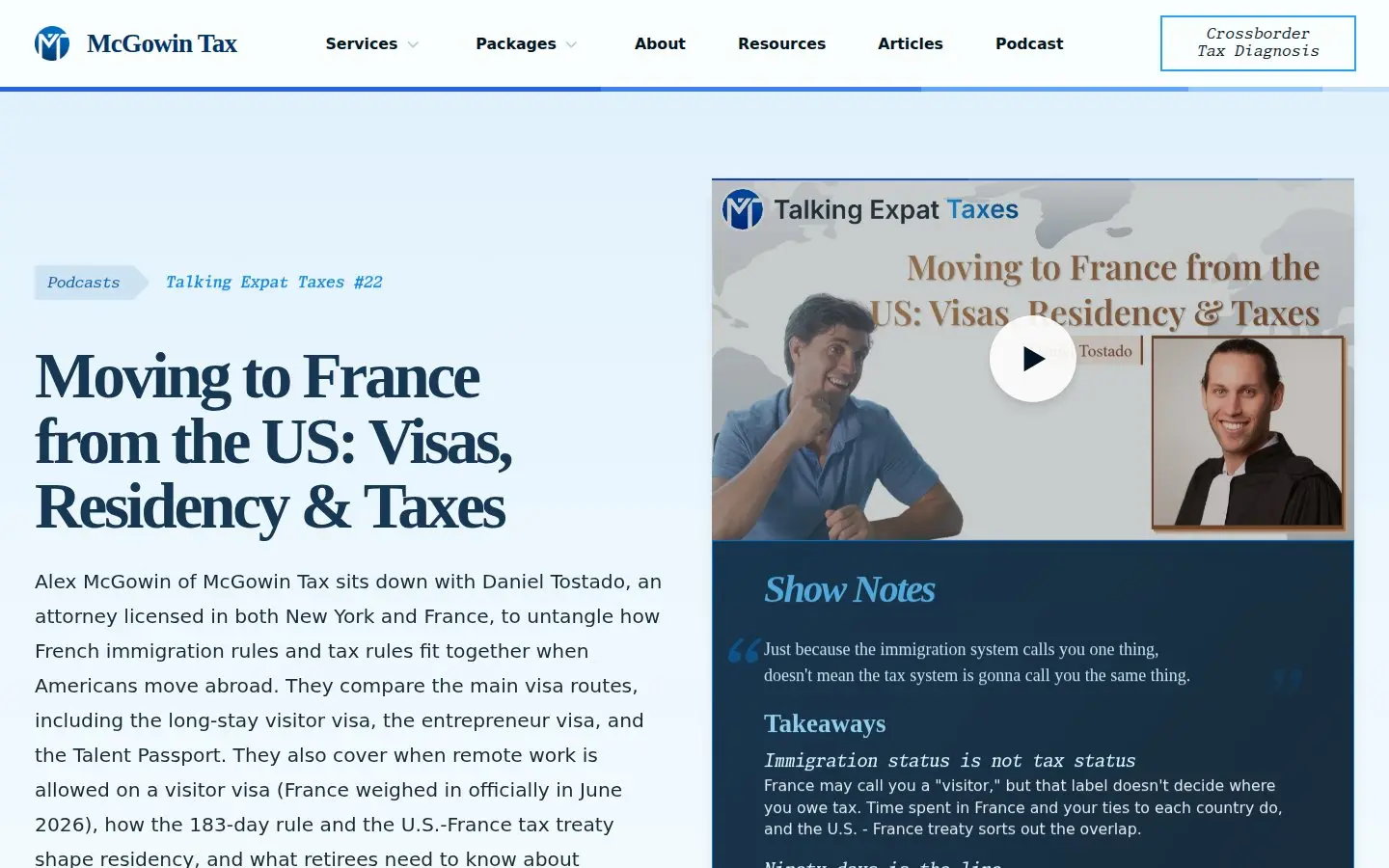
“I know I should post. I also have forty returns due.” Alex talks for one session. We plan the topic with him, film it for his podcast, Talking Expat Taxes, and turn one video into seven pieces of content for every channel he has.
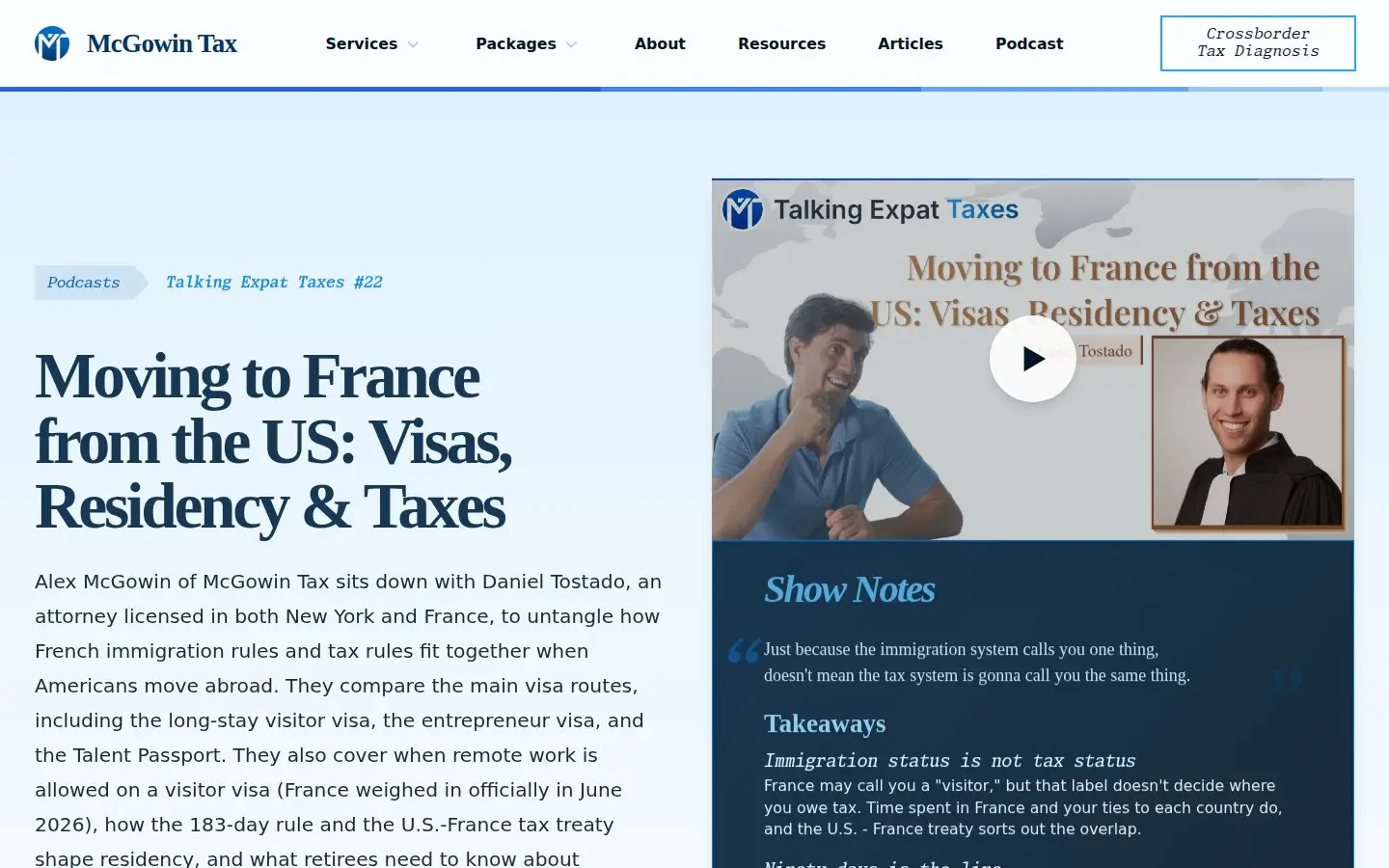

We plan the topic together, then film the episode.
Clips, an article, posts, and the newsletter, all cut from the same recording.
LinkedIn, Facebook, Instagram, YouTube, and TikTok, each in its own format.
Built from the same episode and sent every week.
“Half of what a marketer suggests, my licensing board would have a word about.” So the content teaches instead of sells. We adapt each episode into an article, and Alex refines it until it says what he'd tell a client.

About 70 so far, each one refined with Alex before it's published.
Nothing posts until you've signed off.
Expat tax, explained every week, to readers who subscribed.
We launched community.mcgowintax.com for the firm's audience.
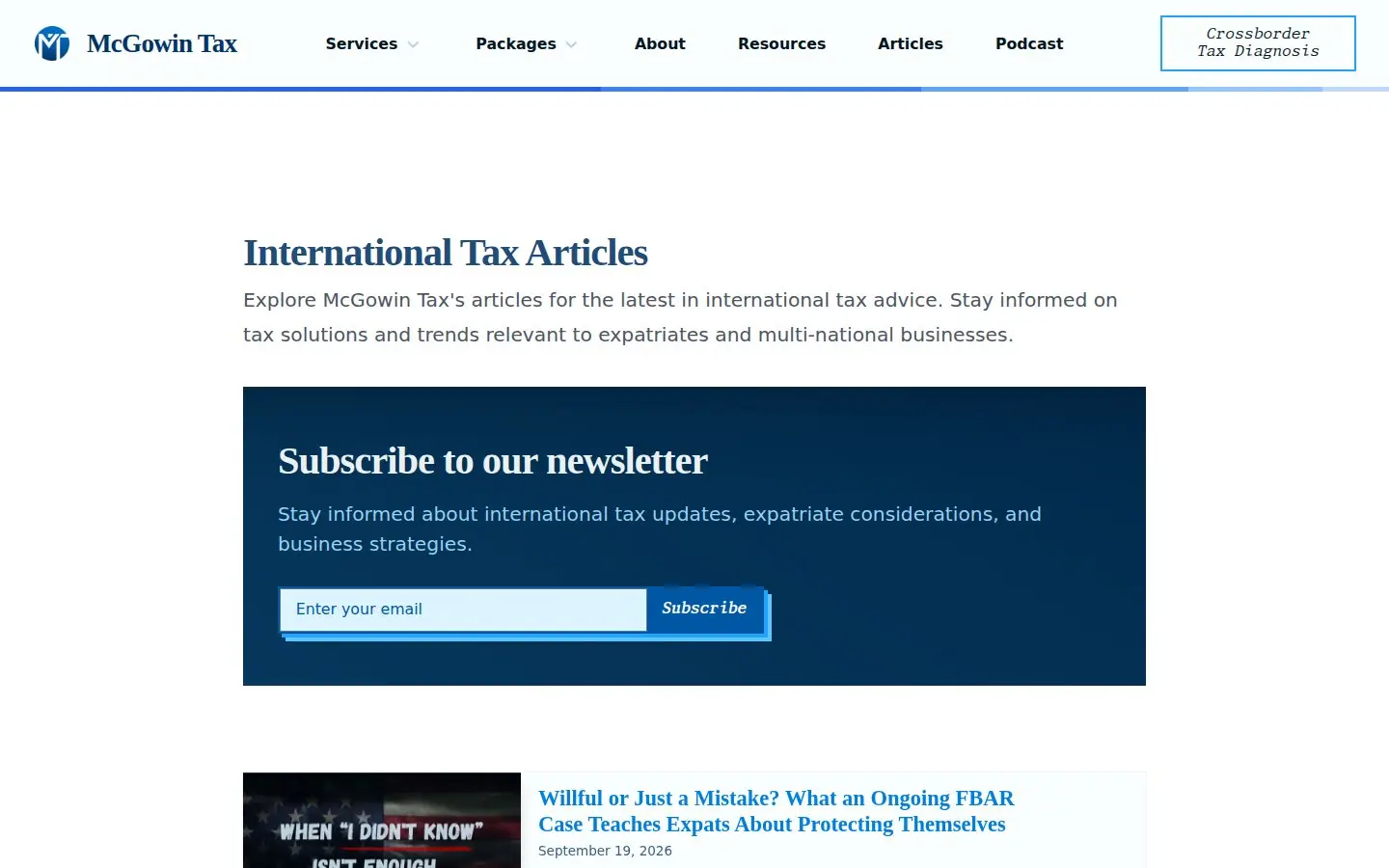
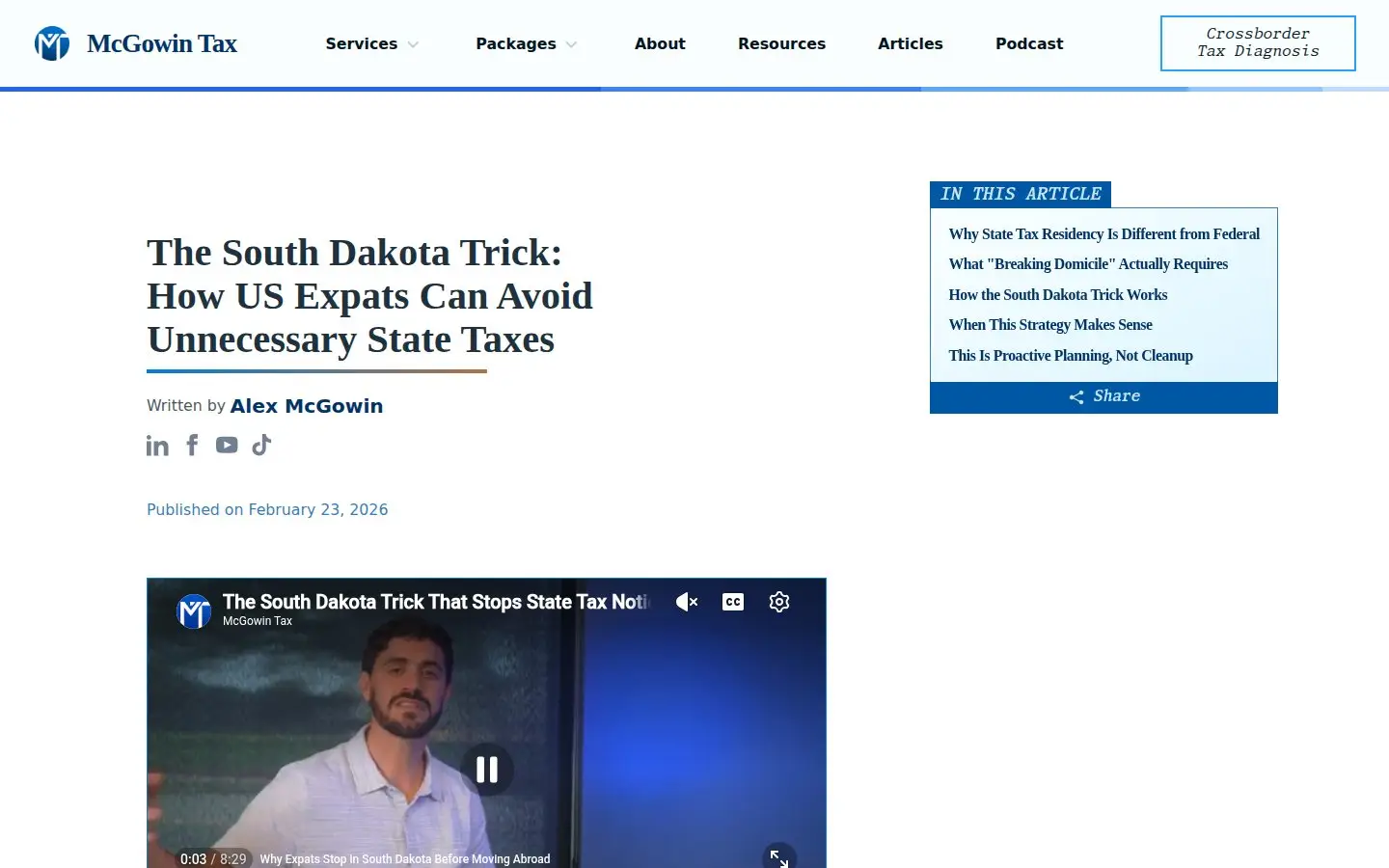
“We can't win a keyword auction against a national firm.” So skip the auction. The site, the podcast, the newsletter, and the community build an audience the firm keeps. Organic search traffic grew 18x on the site we built, and 40x against the site it replaced in 2023.
Monthly average, July to September 2026 against the first half of 2024.
Average search position, July 2025 to March 2026.
The South Dakota residency article is the site's top search page.
ChatGPT and others started sending visitors in 2026.
Pick your practice, then tick the claims you plan to make. Each one gets a flag, the rule behind it, a safer wording, and the source. You don't need an email to see any of it.
Tick the claims your ad makes. You get the rule, a safer wording, and the source for each one. No email needed.
Your state may add rules. Check with the board that licenses you.
Pick your practice to see how each rule applies to it.
Alabama lawyers may not call themselves specialists unless a certifying body the State Bar approved certified them, and the ad must name that body. Lawyers in other states and tax professionals face the general rule against misleading claims.
Say what you limit your work to: "Our practice is limited to estate planning."
"Expert" can read as specialist status or as skill you have not shown. Alabama bars lawyers from implying they are specialists.
Give the experience instead: "20 years handling IRS audits."
Lawyers may cite only a certification an approved body granted. Enrolled agents and Annual Filing Season Program holders may not use "certified". A licensed CPA may use the CPA title.
Enrolled agent: "Enrolled to practice before the Internal Revenue Service." Annual Filing Season Program holder: "AFSP - Record of Completion."
Alabama bans any communication that promises a specific result. Elsewhere a promise creates an unjustified expectation, which the misleading-claims rules for lawyers, practitioners, and CPAs reach.
"We will work to protect your rights."
Alabama bars lawyers from comparing the quality of their services with other lawyers' and from unverifiable superlatives. Everyone else needs proof for a comparison.
"Serving Mobile County since 2005."
Attorneys, CPAs, and enrolled agents have unlimited rights to represent clients. Annual Filing Season Program holders have limited rights, and preparers with only a PTIN have none.
Annual Filing Season Program holder: "AFSP - Record of Completion. Limited representation for returns we prepare."
A testimonial must come from a real client, and you disclose anything of value you gave for it. Alabama lawyers answer for what a testimonial says. A tax client's name and details are protected return information, so get consent first.
"Shared with the client's permission. No payment was given."
A result must be verifiable, described by the type of matter, and not suggest the reader will get the same. A tax client's result also needs the client's consent.
"In a 2025 car-crash case, a jury awarded $250,000. Your result depends on your facts."
Tax preparers may not use dollar amounts or percentages of refunds, credits, or deductions in marketing, even when anonymous or aggregated. Lawyers may show a verifiable total.
"We prepared more than 1,200 returns last season."
An award must not suggest more exclusivity or skill than its criteria support. Name who gave it and link the method.
"Named to the 2026 [list], selected by [publisher]. See [link] for the method."
Under Circular 230, a fee refund tied to an IRS challenge counts as a contingent fee. Paying a penalty caused by your own error is a different promise.
"If we make a math error, we pay the resulting penalty and interest."
Alabama lawyers must say whether the client still owes court costs. Practitioners and CPAs may not prepare an original return or refund claim for a contingent fee.
Lawyer: "No attorney fee unless we recover. You may still owe court costs."
Alabama lawyers must honor an advertised fee for 90 days after the last ad. Practitioners must hold published fees for 30 days and say who pays costs. CPAs must flag a fee they know will likely rise.
"Form 1040 with W-2 income: $250. Price held for 30 days after this ad runs."
A name may not suggest a government tie, a lawyer who is not in the firm, or a firm structure you lack. A tax firm may not put "IRS" in its doing-business-as name.
"Gulf Coast Tax Services." Avoid "IRS", "Federal", or "Alabama Tax Office".
Only people with an Alabama certificate and permit, and firms registered as CPA firms, may use "CPA" or "certified public accountant".
If you are not a CPA, say "Tax preparation services."
Alabama bars titles that look like the CPA title, such as "licensed accountant" or "certified accountant". The statute names permit holders as the people who may say "accountant".
Use "tax preparer" or "bookkeeper".
This suggests the IRS endorses or employs you. Accepted e-file participation "does not imply endorsement by the IRS".
"Authorized IRS e-file Provider," only if the IRS accepted you.
Alabama treats a text the lawyer starts as banned real-time solicitation. The ABA comment says texts are not live contact. Practitioners must label a solicitation and name where they found the person.
Lawyer: send a letter or email that follows Rule 7.3, after the 21-day wait.
Alabama lawyers wait 21 days after an accident, mark the message ADVERTISEMENT, open with the required sentence, and name where they found the person. Practitioners identify the solicitation and its source.
Start with: "ADVERTISEMENT. IF YOU HAVE ALREADY RETAINED A LAWYER FOR THIS MATTER, PLEASE DISREGARD THIS COMMUNICATION."
Lawyers may not pay anyone for a recommendation. Practitioners may not use a lead source that solicits improperly. CPAs must disclose a referral fee to the client in writing.
Lawyer: pay for ad space or a directory listing, not per referral.
A reward conditioned on a positive review is banned. Lawyers also may not give anything of value for a recommendation beyond a nominal gift.
"We'd value your honest review."
A reply must not confirm the person was your client or reveal facts about the work. A tax client's name is protected return information.
"We take every concern seriously. Please call our office so we can talk privately."
Educational content that does not ask for work sits outside Alabama's disclosure and retention duties. A post that solicits needs the disclosures, reachable with one click.
Meta bans ads that imply a criminal record or a vulnerable financial status. Google bans using arrests or bankruptcy to push fear.
"Criminal defense in Mobile." "IRS payment plan help."
Alabama lawyers must disclose tracking and get the visitor's consent first. For every profession, intake-form data sent to an ad platform can be tax return information.
Show a consent banner before pixels load, and keep intake forms off ad tags.
Not legal advice. These flags summarize published rules, which differ by state and change. Check with your state bar or board of accountancy before you publish.
Calling yourself a specialist or saying you specialize in something
Alabama lawyers may not call themselves specialists unless a certifying body the State Bar approved certified them, and the ad must name that body. Lawyers in other states and tax professionals face the general rule against misleading claims.
Say what you limit your work to: "Our practice is limited to estate planning."
Calling yourself an "expert"
"Expert" can read as specialist status or as skill you have not shown. Alabama bars lawyers from implying they are specialists.
Give the experience instead: "20 years handling IRS audits."
Using the word "certified" for yourself
Lawyers may cite only a certification an approved body granted. Enrolled agents and Annual Filing Season Program holders may not use "certified". A licensed CPA may use the CPA title.
Enrolled agent: "Enrolled to practice before the Internal Revenue Service." Annual Filing Season Program holder: "AFSP - Record of Completion."
Promising a result: "guaranteed" or "we will win"
Alabama bans any communication that promises a specific result. Elsewhere a promise creates an unjustified expectation, which the misleading-claims rules for lawyers, practitioners, and CPAs reach.
"We will work to protect your rights."
Comparisons and superlatives ("best", "#1", "better than other firms")
Alabama bars lawyers from comparing the quality of their services with other lawyers' and from unverifiable superlatives. Everyone else needs proof for a comparison.
"Serving Mobile County since 2005."
Saying you can represent clients before the IRS
Attorneys, CPAs, and enrolled agents have unlimited rights to represent clients. Annual Filing Season Program holders have limited rights, and preparers with only a PTIN have none.
Annual Filing Season Program holder: "AFSP - Record of Completion. Limited representation for returns we prepare."
Client testimonials or reviews on your site
A testimonial must come from a real client, and you disclose anything of value you gave for it. Alabama lawyers answer for what a testimonial says. A tax client's name and details are protected return information, so get consent first.
"Shared with the client's permission. No payment was given."
Past results or the outcome of one named matter
A result must be verifiable, described by the type of matter, and not suggest the reader will get the same. A tax client's result also needs the client's consent.
"In a 2025 car-crash case, a jury awarded $250,000. Your result depends on your facts."
Totals or averages of refunds or savings ("$2M in refunds")
Tax preparers may not use dollar amounts or percentages of refunds, credits, or deductions in marketing, even when anonymous or aggregated. Lawyers may show a verifiable total.
"We prepared more than 1,200 returns last season."
Awards and rankings (a Super Lawyers-style badge)
An award must not suggest more exclusivity or skill than its criteria support. Name who gave it and link the method.
"Named to the 2026 [list], selected by [publisher]. See [link] for the method."
An accuracy guarantee, or refunding your fee if the IRS disagrees
Under Circular 230, a fee refund tied to an IRS challenge counts as a contingent fee. Paying a penalty caused by your own error is a different promise.
"If we make a math error, we pay the resulting penalty and interest."
Charging "no fee unless we win", or a fee based on your refund
Alabama lawyers must say whether the client still owes court costs. Practitioners and CPAs may not prepare an original return or refund claim for a contingent fee.
Lawyer: "No attorney fee unless we recover. You may still owe court costs."
Advertising specific prices
Alabama lawyers must honor an advertised fee for 90 days after the last ad. Practitioners must hold published fees for 30 days and say who pays costs. CPAs must flag a fee they know will likely rise.
"Form 1040 with W-2 income: $250. Price held for 30 days after this ad runs."
Your firm name or trade name
A name may not suggest a government tie, a lawyer who is not in the firm, or a firm structure you lack. A tax firm may not put "IRS" in its doing-business-as name.
"Gulf Coast Tax Services." Avoid "IRS", "Federal", or "Alabama Tax Office".
Using "CPA" in your name or title
Only people with an Alabama certificate and permit, and firms registered as CPA firms, may use "CPA" or "certified public accountant".
If you are not a CPA, say "Tax preparation services."
Calling a non-CPA an "accountant", or using "licensed accountant"
Alabama bars titles that look like the CPA title, such as "licensed accountant" or "certified accountant". The statute names permit holders as the people who may say "accountant".
Use "tax preparer" or "bookkeeper".
Saying "IRS approved" or "IRS certified", or using IRS logos or seals
This suggests the IRS endorses or employs you. Accepted e-file participation "does not imply endorsement by the IRS".
"Authorized IRS e-file Provider," only if the IRS accepted you.
Texting people you know need help (accident victims, people with tax liens)
Alabama treats a text the lawyer starts as banned real-time solicitation. The ABA comment says texts are not live contact. Practitioners must label a solicitation and name where they found the person.
Lawyer: send a letter or email that follows Rule 7.3, after the 21-day wait.
Mailing or emailing accident victims or other targeted prospects
Alabama lawyers wait 21 days after an accident, mark the message ADVERTISEMENT, open with the required sentence, and name where they found the person. Practitioners identify the solicitation and its source.
Start with: "ADVERTISEMENT. IF YOU HAVE ALREADY RETAINED A LAWYER FOR THIS MATTER, PLEASE DISREGARD THIS COMMUNICATION."
Paying a referral or lead service
Lawyers may not pay anyone for a recommendation. Practitioners may not use a lead source that solicits improperly. CPAs must disclose a referral fee to the client in writing.
Lawyer: pay for ad space or a directory listing, not per referral.
Rewarding clients for positive reviews
A reward conditioned on a positive review is banned. Lawyers also may not give anything of value for a recommendation beyond a nominal gift.
"We'd value your honest review."
Replying to online reviews
A reply must not confirm the person was your client or reveal facts about the work. A tax client's name is protected return information.
"We take every concern seriously. Please call our office so we can talk privately."
Educational blog posts and social posts
Educational content that does not ask for work sits outside Alabama's disclosure and retention duties. A post that solicits needs the disclosures, reachable with one click.
Ad copy that names the reader's situation ("Arrested?", "Owe the IRS?")
Meta bans ads that imply a criminal record or a vulnerable financial status. Google bans using arrests or bankruptcy to push fear.
"Criminal defense in Mobile." "IRS payment plan help."
Retargeting and tracking pixels on your site
Alabama lawyers must disclose tracking and get the visitor's consent first. For every profession, intake-form data sent to an ad platform can be tax return information.
Show a consent banner before pixels load, and keep intake forms off ad tags.
Keep a copy of every communication for six years, with its date, recipient, and means of sending. Produce it to the Office of General Counsel on request.
Name the city, town, county, or location of at least one bona fide office in every communication. If you have no office in Alabama, say so.
If you are not licensed in Alabama, disclose that clearly and prominently in any communication that reaches Alabama clients.
Keep samples and recipient lists of every targeted communication for two years.
Calling yourself a specialist or saying you specialize in something
Alabama lawyers may not call themselves specialists unless a certifying body the State Bar approved certified them, and the ad must name that body. Lawyers in other states and tax professionals face the general rule against misleading claims.
Say what you limit your work to: "Our practice is limited to estate planning."
Calling yourself an "expert"
"Expert" can read as specialist status or as skill you have not shown. Alabama bars lawyers from implying they are specialists.
Give the experience instead: "20 years handling IRS audits."
Using the word "certified" for yourself
Lawyers may cite only a certification an approved body granted. Enrolled agents and Annual Filing Season Program holders may not use "certified". A licensed CPA may use the CPA title.
Enrolled agent: "Enrolled to practice before the Internal Revenue Service." Annual Filing Season Program holder: "AFSP - Record of Completion."
Promising a result: "guaranteed" or "we will win"
Alabama bans any communication that promises a specific result. Elsewhere a promise creates an unjustified expectation, which the misleading-claims rules for lawyers, practitioners, and CPAs reach.
"We will work to protect your rights."
Comparisons and superlatives ("best", "#1", "better than other firms")
Alabama bars lawyers from comparing the quality of their services with other lawyers' and from unverifiable superlatives. Everyone else needs proof for a comparison.
"Serving Mobile County since 2005."
Saying you can represent clients before the IRS
Attorneys, CPAs, and enrolled agents have unlimited rights to represent clients. Annual Filing Season Program holders have limited rights, and preparers with only a PTIN have none.
Annual Filing Season Program holder: "AFSP - Record of Completion. Limited representation for returns we prepare."
Client testimonials or reviews on your site
A testimonial must come from a real client, and you disclose anything of value you gave for it. Alabama lawyers answer for what a testimonial says. A tax client's name and details are protected return information, so get consent first.
"Shared with the client's permission. No payment was given."
Past results or the outcome of one named matter
A result must be verifiable, described by the type of matter, and not suggest the reader will get the same. A tax client's result also needs the client's consent.
"In a 2025 car-crash case, a jury awarded $250,000. Your result depends on your facts."
Totals or averages of refunds or savings ("$2M in refunds")
Tax preparers may not use dollar amounts or percentages of refunds, credits, or deductions in marketing, even when anonymous or aggregated. Lawyers may show a verifiable total.
"We prepared more than 1,200 returns last season."
Awards and rankings (a Super Lawyers-style badge)
An award must not suggest more exclusivity or skill than its criteria support. Name who gave it and link the method.
"Named to the 2026 [list], selected by [publisher]. See [link] for the method."
An accuracy guarantee, or refunding your fee if the IRS disagrees
Under Circular 230, a fee refund tied to an IRS challenge counts as a contingent fee. Paying a penalty caused by your own error is a different promise.
"If we make a math error, we pay the resulting penalty and interest."
Charging "no fee unless we win", or a fee based on your refund
Alabama lawyers must say whether the client still owes court costs. Practitioners and CPAs may not prepare an original return or refund claim for a contingent fee.
Lawyer: "No attorney fee unless we recover. You may still owe court costs."
Advertising specific prices
Alabama lawyers must honor an advertised fee for 90 days after the last ad. Practitioners must hold published fees for 30 days and say who pays costs. CPAs must flag a fee they know will likely rise.
"Form 1040 with W-2 income: $250. Price held for 30 days after this ad runs."
Your firm name or trade name
A name may not suggest a government tie, a lawyer who is not in the firm, or a firm structure you lack. A tax firm may not put "IRS" in its doing-business-as name.
"Gulf Coast Tax Services." Avoid "IRS", "Federal", or "Alabama Tax Office".
Using "CPA" in your name or title
Only people with an Alabama certificate and permit, and firms registered as CPA firms, may use "CPA" or "certified public accountant".
If you are not a CPA, say "Tax preparation services."
Calling a non-CPA an "accountant", or using "licensed accountant"
Alabama bars titles that look like the CPA title, such as "licensed accountant" or "certified accountant". The statute names permit holders as the people who may say "accountant".
Use "tax preparer" or "bookkeeper".
Saying "IRS approved" or "IRS certified", or using IRS logos or seals
This suggests the IRS endorses or employs you. Accepted e-file participation "does not imply endorsement by the IRS".
"Authorized IRS e-file Provider," only if the IRS accepted you.
Texting people you know need help (accident victims, people with tax liens)
Alabama treats a text the lawyer starts as banned real-time solicitation. The ABA comment says texts are not live contact. Practitioners must label a solicitation and name where they found the person.
Lawyer: send a letter or email that follows Rule 7.3, after the 21-day wait.
Mailing or emailing accident victims or other targeted prospects
Alabama lawyers wait 21 days after an accident, mark the message ADVERTISEMENT, open with the required sentence, and name where they found the person. Practitioners identify the solicitation and its source.
Start with: "ADVERTISEMENT. IF YOU HAVE ALREADY RETAINED A LAWYER FOR THIS MATTER, PLEASE DISREGARD THIS COMMUNICATION."
Paying a referral or lead service
Lawyers may not pay anyone for a recommendation. Practitioners may not use a lead source that solicits improperly. CPAs must disclose a referral fee to the client in writing.
Lawyer: pay for ad space or a directory listing, not per referral.
Rewarding clients for positive reviews
A reward conditioned on a positive review is banned. Lawyers also may not give anything of value for a recommendation beyond a nominal gift.
"We'd value your honest review."
Replying to online reviews
A reply must not confirm the person was your client or reveal facts about the work. A tax client's name is protected return information.
"We take every concern seriously. Please call our office so we can talk privately."
Educational blog posts and social posts
Educational content that does not ask for work sits outside Alabama's disclosure and retention duties. A post that solicits needs the disclosures, reachable with one click.
Ad copy that names the reader's situation ("Arrested?", "Owe the IRS?")
Meta bans ads that imply a criminal record or a vulnerable financial status. Google bans using arrests or bankruptcy to push fear.
"Criminal defense in Mobile." "IRS payment plan help."
Retargeting and tracking pixels on your site
Alabama lawyers must disclose tracking and get the visitor's consent first. For every profession, intake-form data sent to an ad platform can be tax return information.
Show a consent banner before pixels load, and keep intake forms off ad tags.
Register the firm with the State Board of Public Accountancy within 30 days of opening, and report a name change within 30 days.
Disclose to the client in writing any referral fee you pay or accept.
Calling yourself a specialist or saying you specialize in something
Alabama lawyers may not call themselves specialists unless a certifying body the State Bar approved certified them, and the ad must name that body. Lawyers in other states and tax professionals face the general rule against misleading claims.
Say what you limit your work to: "Our practice is limited to estate planning."
Calling yourself an "expert"
"Expert" can read as specialist status or as skill you have not shown. Alabama bars lawyers from implying they are specialists.
Give the experience instead: "20 years handling IRS audits."
Using the word "certified" for yourself
Lawyers may cite only a certification an approved body granted. Enrolled agents and Annual Filing Season Program holders may not use "certified". A licensed CPA may use the CPA title.
Enrolled agent: "Enrolled to practice before the Internal Revenue Service." Annual Filing Season Program holder: "AFSP - Record of Completion."
Promising a result: "guaranteed" or "we will win"
Alabama bans any communication that promises a specific result. Elsewhere a promise creates an unjustified expectation, which the misleading-claims rules for lawyers, practitioners, and CPAs reach.
"We will work to protect your rights."
Comparisons and superlatives ("best", "#1", "better than other firms")
Alabama bars lawyers from comparing the quality of their services with other lawyers' and from unverifiable superlatives. Everyone else needs proof for a comparison.
"Serving Mobile County since 2005."
Saying you can represent clients before the IRS
Attorneys, CPAs, and enrolled agents have unlimited rights to represent clients. Annual Filing Season Program holders have limited rights, and preparers with only a PTIN have none.
Annual Filing Season Program holder: "AFSP - Record of Completion. Limited representation for returns we prepare."
Client testimonials or reviews on your site
A testimonial must come from a real client, and you disclose anything of value you gave for it. Alabama lawyers answer for what a testimonial says. A tax client's name and details are protected return information, so get consent first.
"Shared with the client's permission. No payment was given."
Past results or the outcome of one named matter
A result must be verifiable, described by the type of matter, and not suggest the reader will get the same. A tax client's result also needs the client's consent.
"In a 2025 car-crash case, a jury awarded $250,000. Your result depends on your facts."
Totals or averages of refunds or savings ("$2M in refunds")
Tax preparers may not use dollar amounts or percentages of refunds, credits, or deductions in marketing, even when anonymous or aggregated. Lawyers may show a verifiable total.
"We prepared more than 1,200 returns last season."
Awards and rankings (a Super Lawyers-style badge)
An award must not suggest more exclusivity or skill than its criteria support. Name who gave it and link the method.
"Named to the 2026 [list], selected by [publisher]. See [link] for the method."
An accuracy guarantee, or refunding your fee if the IRS disagrees
Under Circular 230, a fee refund tied to an IRS challenge counts as a contingent fee. Paying a penalty caused by your own error is a different promise.
"If we make a math error, we pay the resulting penalty and interest."
Charging "no fee unless we win", or a fee based on your refund
Alabama lawyers must say whether the client still owes court costs. Practitioners and CPAs may not prepare an original return or refund claim for a contingent fee.
Lawyer: "No attorney fee unless we recover. You may still owe court costs."
Advertising specific prices
Alabama lawyers must honor an advertised fee for 90 days after the last ad. Practitioners must hold published fees for 30 days and say who pays costs. CPAs must flag a fee they know will likely rise.
"Form 1040 with W-2 income: $250. Price held for 30 days after this ad runs."
Your firm name or trade name
A name may not suggest a government tie, a lawyer who is not in the firm, or a firm structure you lack. A tax firm may not put "IRS" in its doing-business-as name.
"Gulf Coast Tax Services." Avoid "IRS", "Federal", or "Alabama Tax Office".
Using "CPA" in your name or title
Only people with an Alabama certificate and permit, and firms registered as CPA firms, may use "CPA" or "certified public accountant".
If you are not a CPA, say "Tax preparation services."
Calling a non-CPA an "accountant", or using "licensed accountant"
Alabama bars titles that look like the CPA title, such as "licensed accountant" or "certified accountant". The statute names permit holders as the people who may say "accountant".
Use "tax preparer" or "bookkeeper".
Saying "IRS approved" or "IRS certified", or using IRS logos or seals
This suggests the IRS endorses or employs you. Accepted e-file participation "does not imply endorsement by the IRS".
"Authorized IRS e-file Provider," only if the IRS accepted you.
Texting people you know need help (accident victims, people with tax liens)
Alabama treats a text the lawyer starts as banned real-time solicitation. The ABA comment says texts are not live contact. Practitioners must label a solicitation and name where they found the person.
Lawyer: send a letter or email that follows Rule 7.3, after the 21-day wait.
Mailing or emailing accident victims or other targeted prospects
Alabama lawyers wait 21 days after an accident, mark the message ADVERTISEMENT, open with the required sentence, and name where they found the person. Practitioners identify the solicitation and its source.
Start with: "ADVERTISEMENT. IF YOU HAVE ALREADY RETAINED A LAWYER FOR THIS MATTER, PLEASE DISREGARD THIS COMMUNICATION."
Paying a referral or lead service
Lawyers may not pay anyone for a recommendation. Practitioners may not use a lead source that solicits improperly. CPAs must disclose a referral fee to the client in writing.
Lawyer: pay for ad space or a directory listing, not per referral.
Rewarding clients for positive reviews
A reward conditioned on a positive review is banned. Lawyers also may not give anything of value for a recommendation beyond a nominal gift.
"We'd value your honest review."
Replying to online reviews
A reply must not confirm the person was your client or reveal facts about the work. A tax client's name is protected return information.
"We take every concern seriously. Please call our office so we can talk privately."
Educational blog posts and social posts
Educational content that does not ask for work sits outside Alabama's disclosure and retention duties. A post that solicits needs the disclosures, reachable with one click.
Ad copy that names the reader's situation ("Arrested?", "Owe the IRS?")
Meta bans ads that imply a criminal record or a vulnerable financial status. Google bans using arrests or bankruptcy to push fear.
"Criminal defense in Mobile." "IRS payment plan help."
Retargeting and tracking pixels on your site
Alabama lawyers must disclose tracking and get the visitor's consent first. For every profession, intake-form data sent to an ad platform can be tax return information.
Show a consent banner before pixels load, and keep intake forms off ad tags.
Keep recordings of radio and TV ads, and copies of direct mail and email with their recipient lists, for at least 36 months.
If you are an IRS e-file provider, keep a copy of each ad until the end of the calendar year after you last used it.
Seven groups of claims. Open one in the checker and read the flag for your practice and state.
Lawyer, CPA firm, enrolled agent, and tax preparer. A state with no rules of its own reads the national rules.
Rules that bind the ad itself, separate from the claim you are checking.
Keep a copy of every communication for six years, with its date, recipient, and means of sending. Produce it to the Office of General Counsel on request.
Name the city, town, county, or location of at least one bona fide office in every communication. If you have no office in Alabama, say so.
If you are not licensed in Alabama, disclose that clearly and prominently in any communication that reaches Alabama clients.
Keep samples and recipient lists of every targeted communication for two years.
Register the firm with the State Board of Public Accountancy within 30 days of opening, and report a name change within 30 days.
Disclose to the client in writing any referral fee you pay or accept.
Keep recordings of radio and TV ads, and copies of direct mail and email with their recipient lists, for at least 36 months.
If you are an IRS e-file provider, keep a copy of each ad until the end of the calendar year after you last used it.
Keep recordings of radio and TV ads, and copies of direct mail and email with their recipient lists, for at least 36 months.
If you are an IRS e-file provider, keep a copy of each ad until the end of the calendar year after you last used it.
Not legal advice. These flags summarize published rules, which differ by state and change. Check with your state bar or board of accountancy before you publish.
The checker needs JavaScript to sort the rules by practice. Every rule is listed above. Leave your email and we'll send the kit for every practice as a PDF.
Finish the tool to see your result. The email ask comes after.
Check your inbox. Your content kit and its PDF are on their way.
Something went wrong sending your message.
Please check your entries and try again - or email us directly.
A few short notes over the next two weeks, then one a month for a year with that month's post ideas. One click stops them. Privacy
Step 2 of 2
On its way. Check your inbox in a minute.
Something went wrong sending your message.
Please check your entries and try again - or email us directly.
What Alabama Rule 7.2(l) allows, and what the FTC adds
Yes, in Alabama, on three conditions. Here is what the rule requires, which reviews fall outside it, and how to reply to a review without breaking client confidentiality.
Checked October 2026
The answer depends on whether you are a lawyer, a CPA, an enrolled agent, or a preparer
For an Alabama lawyer the answer is no. For everyone else, the word itself is not banned in the sources we read, but its neighbors are, and "certified" is the one most people trip on.
Checked October 2026
The disclaimer, the filing, the 21-day wait, texts, and tracking
The Supreme Court of Alabama rewrote Rules 7.1, 7.2, and 7.3. Here is what stopped being required, what grew, and what to check on your website.
Checked October 2026
Everything our team does for McGowin Tax, every month. You bring the expertise. We bring the camera, and the patience for TikTok.
We plan each topic with you, then film it.
Every episode, cut into clips for each platform.
Adapted from the recording and refined with you.
Five platforms, posted for you.
Built from the same episode, every week.
Where the articles live and prospects book a consultation.
No law, tax, or accounting client has a review on file yet, so these come from a contractor, a food tour, and a vacation rental.
AVO Dynamics was great to work with from the videography all the way through editing. Their editing was completed in a very timely manner, and all work was well done.
 Michael HughesProject Manager, Brasfield & Gorrie
Had a great experience with AVO! They took care of every little detail to help create a video for my company. Love the finished product. Highly recommend anyone choose them for marketing their business.
 Chris AndrewsOwner, Bienville Bites Food Tour
When we decided to turn our generational home into an Airbnb, AVO Dynamics made it a seamless success! Their stunning branding package, exceptional photography, and strategic marketing went above and beyond, delivering amazing results-even in our rural location. They also manage day-to-day operations effortlessly, making the entire process stress-free. Highly recommend their expertise to anyone looking to turn their dream into reality!
 Marty WilliamsOwner, Williams Bungalow
Scope sets the final number, and you get it in writing before we start.
One working session with the people who'd do the work. We go through what your firm teaches clients and where they find you, and you leave knowing what to film first, whether or not we end up working together.
You do, before anything goes out.
No. It works best when the owner talks, but we can write in your voice.
Yes, the model is the same: teach what you know. Our lead example is a tax firm, and we say so.
Tell us what your clients ask you most. We'll tell you what we'd film first.